Coolhour
The best hour to run in the heat.
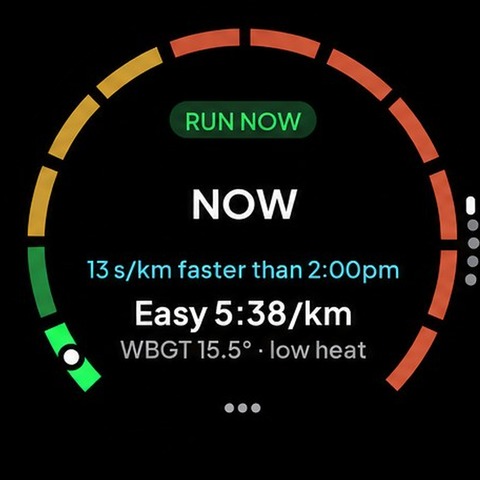
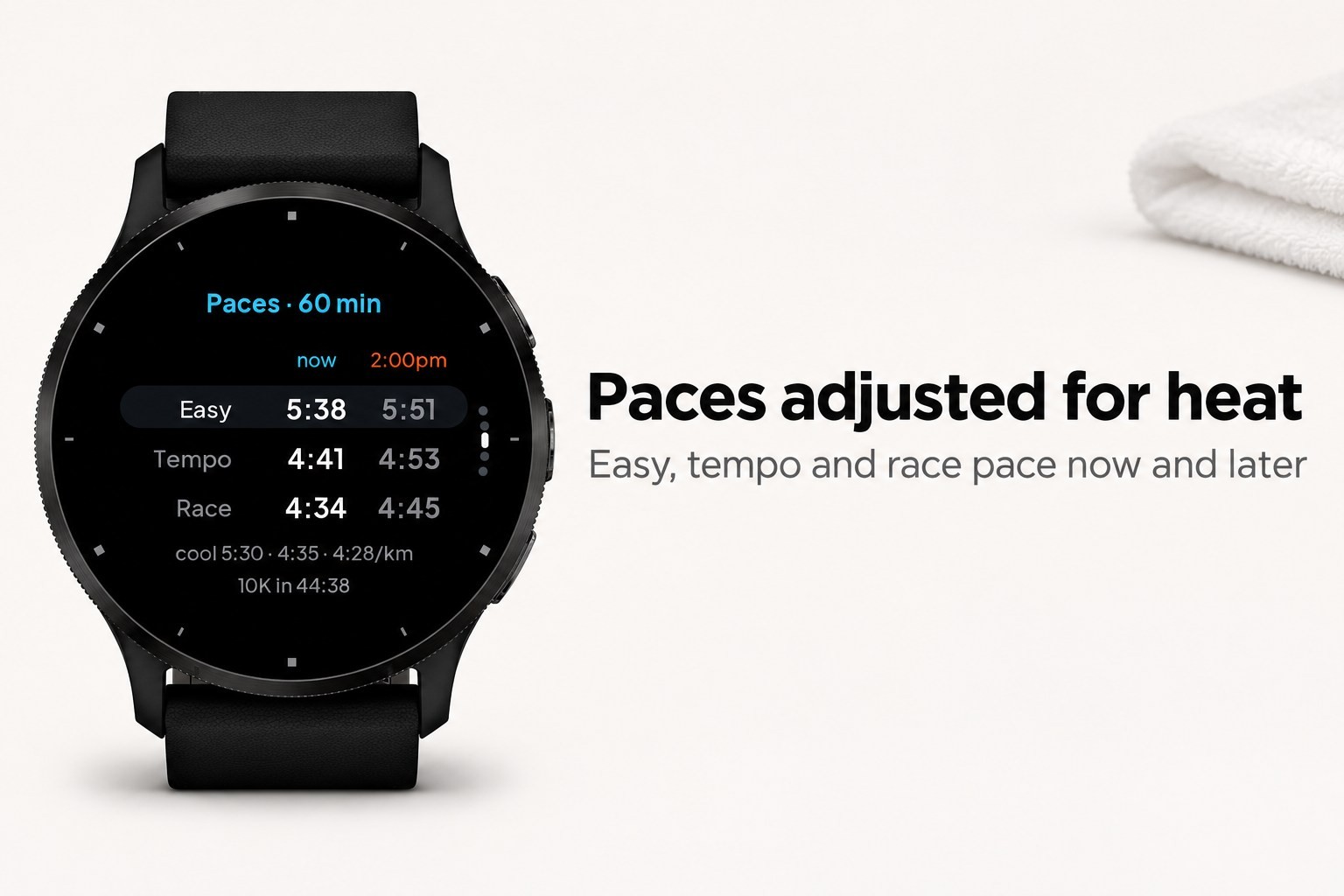
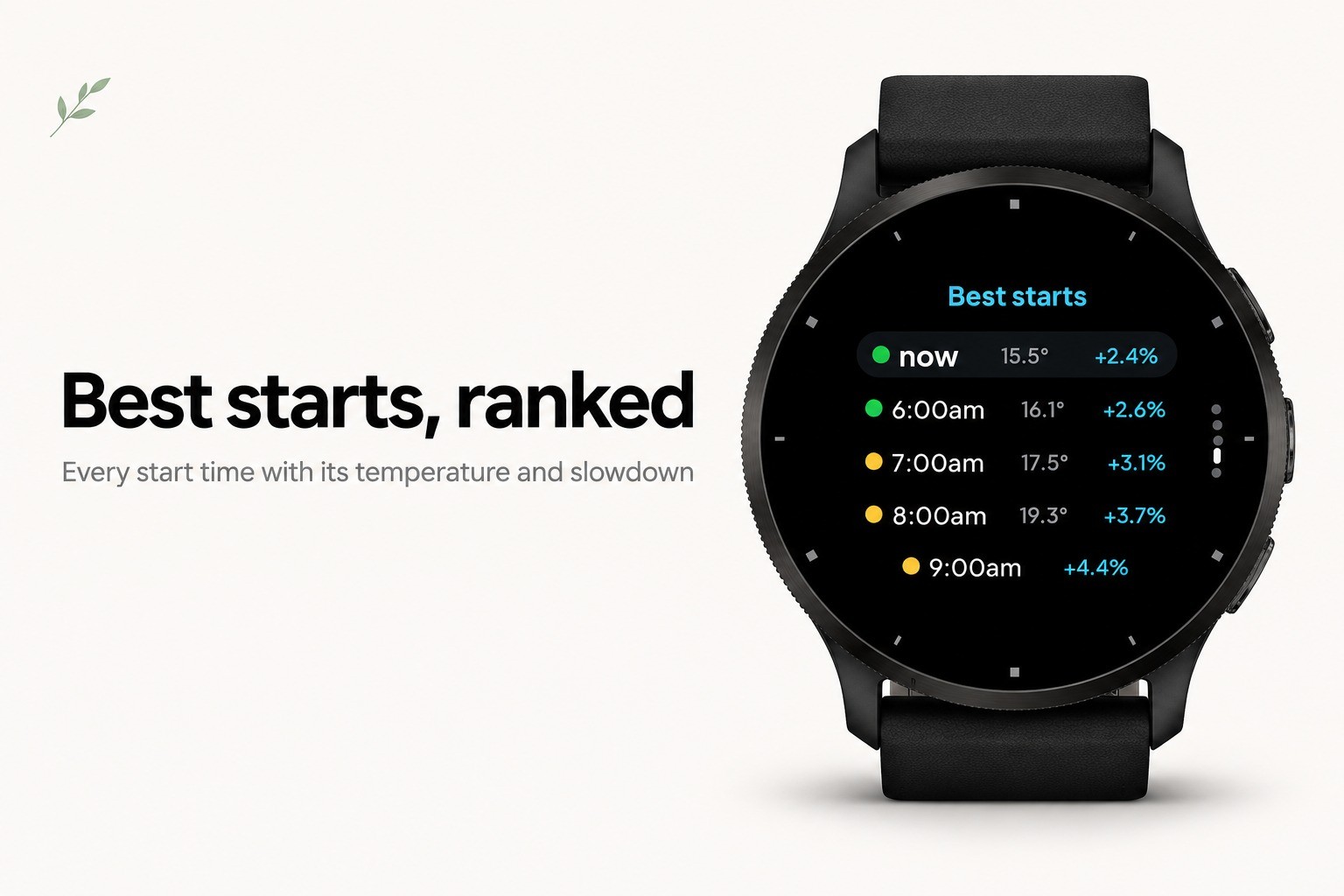
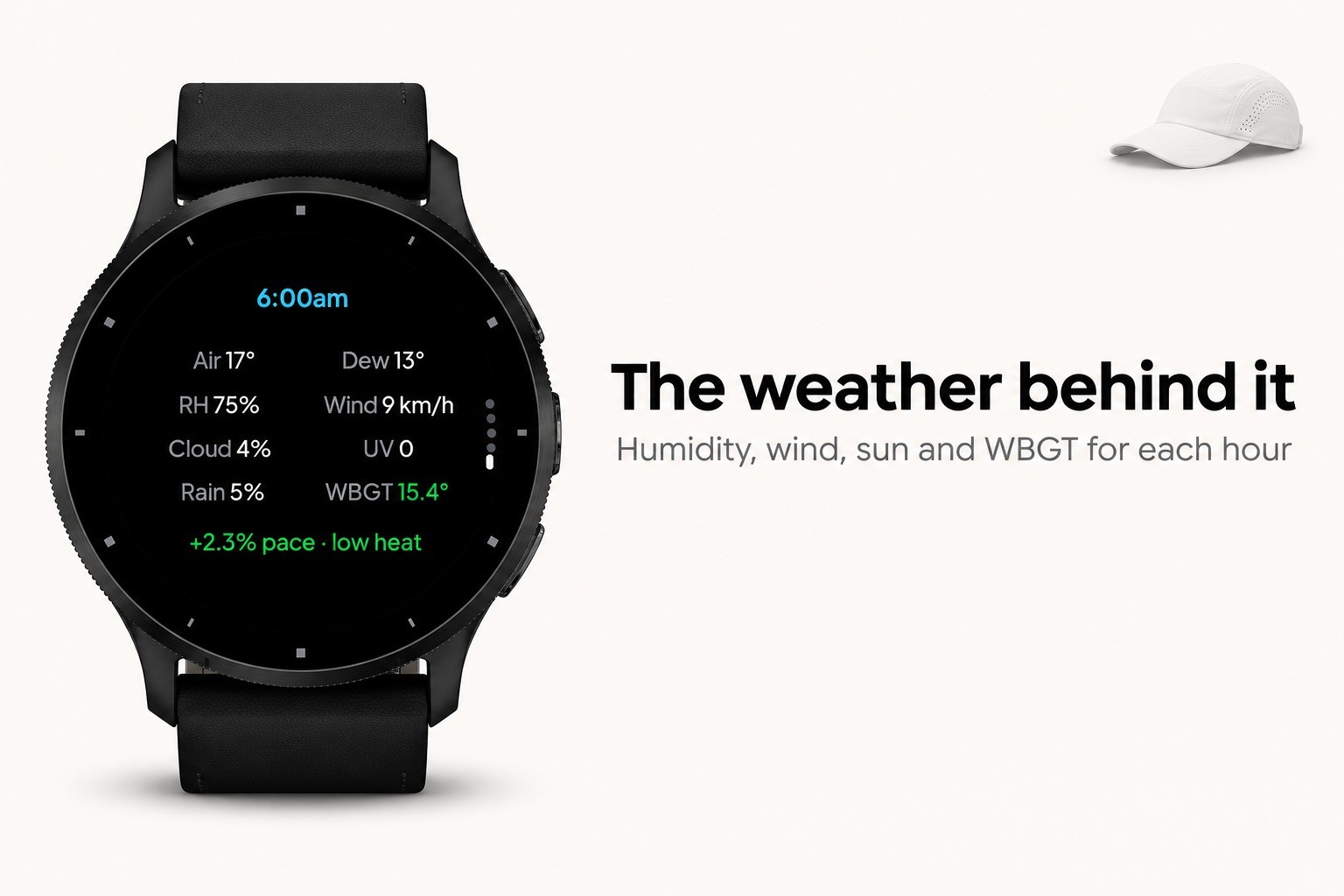
Coolhour scores every hour of the coming day for running and tells you when to go and how fast. It reads the hourly forecast on your watch, works out the heat stress of each hour as WBGT (temperature, dew point, sun, cloud and wind together) and turns that into a pace: "Run at 06:00, 18 s/km faster than at 14:00".
The pace cost follows the marathon data of Ely et al. (2007): performance slows as WBGT rises, and slower runners slow more, so Coolhour scales it to your own level from your watch's VO2max or your own easy pace. Hours you sleep, hours you are busy, storms and (if you want) darkness are left out. An evening or morning alert gives you the best hour before you plan your day.
What it does
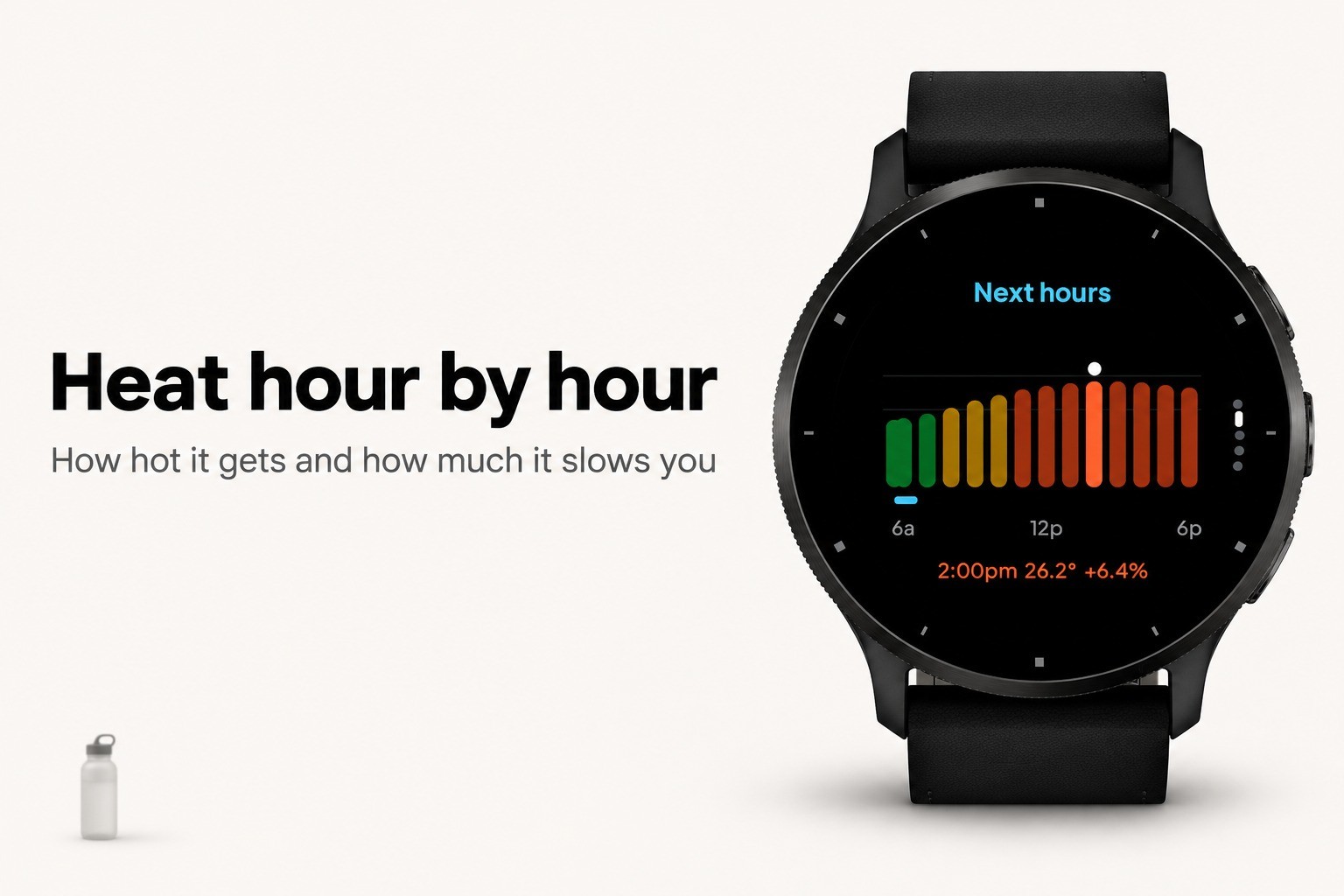
Best start for a run of 30 to 120 minutes within the next 6 to 18 hours, in the colour of the running heat flag (green, yellow, red, black). Heat-adjusted easy, tempo and race pace for the best and the hottest hour. Timeline of WBGT per hour with the best window marked; pick an hour to see air, dew point, humidity, wind, cloud, UV, rain and WBGT, or mark it as busy. Ranking of the five best starts. Rain, strong wind and high UV push an hour down. Glance with the best hour and pace, kept current in the background. Optional alert in the evening (20, 21 or 22 h) or morning (6, 7 or 8 h).
What it needs
A watch with hourly weather (Connect IQ 3.2 or newer) and a phone connection now and then for the forecast. Dew point, cloud cover and UV come straight from the forecast on newer watches; older watches use an estimate. Coolhour is a planning aid based on published research; it suggests a pace and does not judge whether running in the heat is safe for you.